What myxoid means
Myxoid melanoma is a rare histological presentation in which tumour cells lie within an extracellular matrix rich in mucinous substances such as glycosaminoglycans. “Myxoid” describes the tissue environment rather than mucus visibly produced on the skin.
A myxoid component has been described in metastases and primary melanomas, including noncutaneous sites such as sinonasal regions. The name alone therefore does not establish origin. A pale or gelatinous-looking microscopic matrix does not necessarily produce a visibly cystic or translucent lesion.
Clinical appearance and pigmentation
It may appear as a mass or nodule, sometimes enlarging, with little or no pigment. Reported trunk and limb locations are not exclusive. An amelanotic appearance can make clinical recognition more difficult, as it can in other melanoma types.
No external sign identifies it with certainty. A previous melanoma history matters when a new lesion appears but does not alone establish metastasis. Diagnosis requires adequate tissue.
Matrix, stains and markers
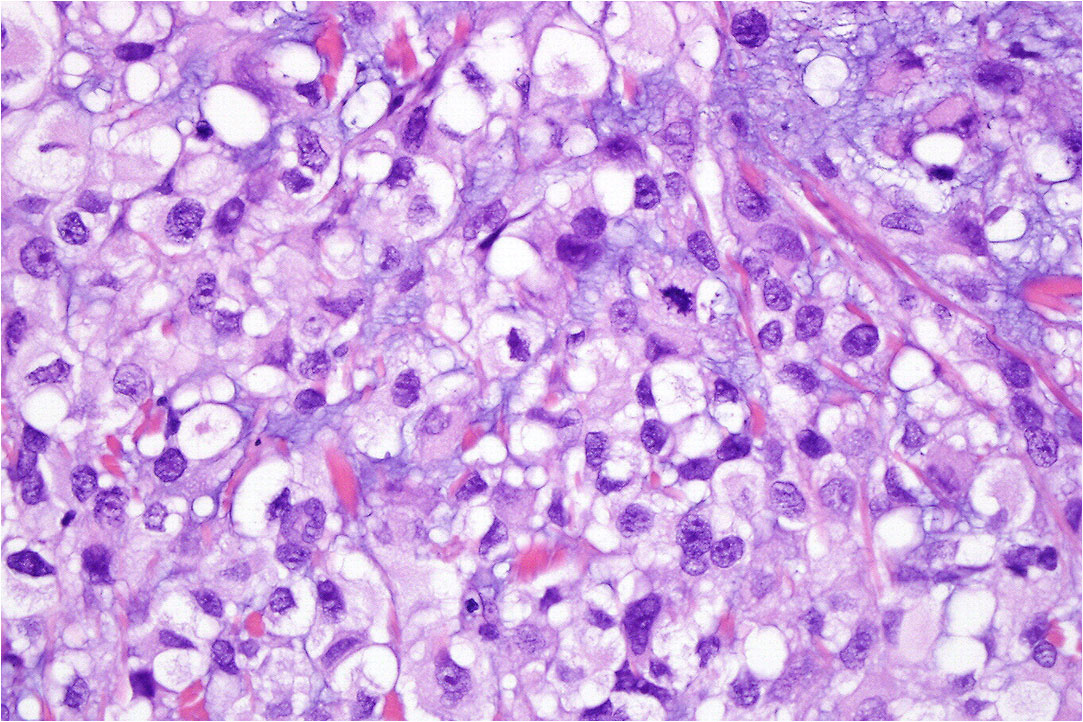
Histology may show malignant cells of varying size and shape within myxoid stroma. Stains for mucinous substances, such as Alcian blue, can demonstrate the matrix. Mucicarmine and diastase-PAS contribute to differential diagnosis according to the sample. Results described in individual cases should not become a mandatory sequence of positive and negative stains.
The matrix’s origin and composition have received different interpretations; it is not established that every case reflects only a tissue response and never tumour-cell production. The appearance must be distinguished from other myxoid neoplasms, including mesenchymal and other cellular lineages.
S100, SOX10 and melanocytic markers may form part of the panel, with variable expression. E9 staining mentioned in historical descriptions is not a standard clinical test independently predicting rapid progression. Architecture, immunohistochemistry, clinical findings and earlier samples must be integrated.
Management and evidence limitations
There is no established treatment regimen specific to the myxoid component alone. Management follows the primary site, stage, operability and biology: surgery where appropriate, systemic options when indicated and radiotherapy in selected situations.
Chemotherapy should not automatically become the first option merely because the variant is rare. In difficult cases, pathology review may prevent resemblance to a sarcoma from leading to an inappropriate pathway.
Prognosis and follow-up depend on the disease as a whole. Ask whether the sample represents a primary lesion or metastasis and which conclusions are established rather than based on limited literature.
Sources and update
Editorial revision: 17 October 2026. This information does not replace medical assessment. For very rare variants, some evidence comes from small series or case reports.