Historical milestones explain why diagnosis and treatment continue to evolve.
Hunter, Laennec and Norris
Melanoma’s history predates the modern disease definition: accounts of dark tumours cannot always be reclassified with certainty. John Hunter is remembered for removing a lesion in 1787 that was later recognised as melanoma and preserved in the Royal College of Surgeons collection. This does not establish that no similar tumour had been described previously.
From the late eighteenth into the nineteenth century, clinical observation and pathology gradually distinguished these lesions. René Laennec contributed descriptions of melanosis; William Norris published an English account in 1820, noticing familial features later discussed in his 1857 case collection. Historical terminology did not exactly match today’s definitions.
Samuel Cooper highlighted early removal and the difficulty of disseminated disease in the nineteenth century. Jean Cruveilhier’s illustrations belong to the same tradition of pathological documentation. Claims of absolute priority, isolated dates or discoveries attributed to one person require caution: knowledge developed through successive contributions.
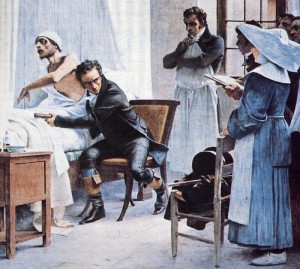
Sources: Holland-Frei Cancer Medicine — History of melanoma; JAMA Dermatology — History of precursors to malignant melanoma.
From microscopy to prevention
Microscopy made it possible to relate clinical appearance to tumour characteristics. During the twentieth century, thickness, ulceration and lymph node spread became increasingly important to prognostic classification. Epidemiological observations, including Henry Lancaster’s work, helped investigate environmental and solar radiation relationships.
Dermoscopy, recognition of change and biopsy improved diagnosis. Staging systems have changed over time, so comparing historical outcomes without knowing the classification used can mislead. Surgery also evolved from very extensive procedures towards evidence-based, risk-adapted decisions that consider function and quality of life.
Sources: Holland-Frei Cancer Medicine — History of melanoma; ESMO — Cutaneous melanoma guideline, 2025.
Why history does not define today’s prognosis
Molecular and immunological knowledge led to targeted treatments and checkpoint inhibitors, changing care in several advanced and high-risk settings. This does not mean every melanoma is curable or every patient receives the same medicines. It does explain why a nineteenth-century description of incurability cannot serve as a current definition.
Historical images remain part of the site’s heritage. Dr Nicola Angelotti’s original contribution is distinguished from the later editorial update. Use the dedicated diagnosis, staging and treatment sections for current care: history explains the development of ideas rather than selecting treatment.
Sources: NCI — Melanoma Treatment (PDQ); ESMO — Cutaneous melanoma guideline, 2025.
Editorial review and source consultation: 17 October 2026. Educational information, not individual healthcare or benefits advice. Source checking does not certify a new specialist clinical validation.