Where treatment decisions begin
Medical treatment for melanoma includes approaches acting on the immune system or specific tumour-cell mechanisms, alongside options used in particular circumstances. There is no single best medicine for everyone. Decisions start with histological diagnosis, stage, whether the disease can be removed, relevant mutations and the person’s overall condition.
Cutaneous melanoma must be distinguished from mucosal and ocular forms: their biology and treatment indications are not always interchangeable. Even two people with cutaneous melanoma may have different treatment goals. A BRAF mutation alone establishes neither disease severity nor an obligation to start a particular treatment.
This page is the pathway index: child pages cover approved medicines, BRAF V600E, ipilimumab, vemurafenib, cobimetinib and dabrafenib with trametinib. These explanations are not prescriptions and do not replace multidisciplinary discussion.

Sources for this section: ESMO — Cutaneous melanoma: Clinical Practice Guideline (2024/2025); National Cancer Institute — Melanoma Treatment (PDQ), health professional version.
Adjuvant, neoadjuvant and advanced-disease treatment
Adjuvant treatment is offered after complete removal in selected melanomas at risk of recurrence. It does not necessarily treat a tumour that remains visible: it aims to lower the risk of disease returning. Expected benefit must be weighed against possible adverse effects in someone who has no detectable disease after surgery.
Neoadjuvant treatment precedes a planned operation in selected settings. In unresectable or metastatic disease, systemic treatment instead aims to control disease, prolong survival and maintain quality of life. These situations must not be confused: the same medicine can have different evidence or authorisations according to stage and treatment setting.
Always ask what the goal is in your case, how the result will be measured and when the strategy will be reassessed. Radiological response, freedom from recurrence and survival are different measures.
Sources for this section: National Cancer Institute — Melanoma Treatment (PDQ), health professional version; ESMO — Cutaneous melanoma: Clinical Practice Guideline (2024/2025).
Immunotherapy today: checkpoint inhibitors
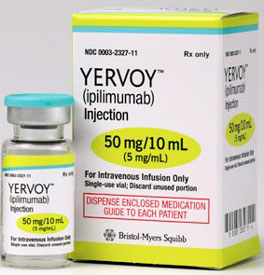
Nivolumab and pembrolizumab target the PD-1 checkpoint; ipilimumab targets CTLA-4; relatlimab targets LAG-3 and is available combined with nivolumab. These medicines help release some brakes on the immune response. They are not vaccines or a generic “immune boost” achievable with supplements.
Anti-PD-1 medicines alone and certain combinations are established options in specific melanoma settings. Nivolumab–ipilimumab can produce durable benefit but increases toxicity risk compared with monotherapy; ten-year CheckMate 067 results document the development of this evidence. No study percentage can predict an individual’s response with certainty.
The European first-line indication for nivolumab–relatlimab requires advanced melanoma and tumour-cell PD-L1 expression below 1%, alongside the age criteria in its label. This requirement should not automatically be extended to every anti-PD-1 medicine or replaced with different US labelling.
Sources for this section: EMA — Opdivo: indications and product information; EMA — Keytruda: indications and product information; EMA — Yervoy: indications, product information and leaflet; EMA — Opdualag: indications and product information; Wolchok et al. — CheckMate 067, final 10-year outcomes (2024/2025).
Immune-mediated effects: recognising them promptly
Immune activation can affect healthy organs: the bowel, liver, lungs, skin and endocrine glands are possible sites, but not the only ones. Persistent diarrhoea, breathing difficulty, jaundice, marked weakness, unusual headache or important changes should be reported to the team. Some reactions occur after treatment has ended.
Before starting, disclose autoimmune disease, transplants, immunosuppressive treatment and every medicine you take. These are important factors in treatment selection. The centre sets out monitoring, contact arrangements and management of adverse events; treatment interruption or treatment of inflammation may be necessary.
Do not try to compensate for new symptoms with self-treatment or wait until the next infusion. Perceived severity does not always reflect clinical severity, and prompt assessment can prevent complications. Severe or rapidly worsening symptoms require urgent care.
Sources for this section: EMA — Yervoy: indications, product information and leaflet; EMA — Opdivo: indications and product information; EMA — Keytruda: indications and product information.
BRAF and MEK targeted treatments
For melanomas with a BRAF V600 mutation, combinations can block BRAF and MEK, two components of the same signalling pathway. These pairs include dabrafenib–trametinib, vemurafenib–cobimetinib and encorafenib–binimetinib. They are not interchangeable medicines to combine freely: each pair has its own evidence, indications and precautions.
Molecular testing must document a relevant variant. BRAF/MEK treatment is not a standard choice for melanoma lacking the required mutation. It may shrink tumours rapidly, but resistance can limit benefit duration; immunotherapy remains an option even when BRAF is mutated.
Treatment sequence depends on disease pace, symptoms, involved sites, prior treatment and contraindications. DREAMseq studied the order of combined immunotherapy and dabrafenib–trametinib: its findings support the importance of sequencing without making all clinical situations identical.
Sources for this section: EMA — Tafinlar: indications, product information and leaflet; EMA — Cotellic: indications, product information and leaflet; EMA — Braftovi (encorafenib); DREAMseq — Randomized treatment-sequence trial (2022/2023).
Treatment around surgery
Adjuvant options include anti-PD-1 treatment in defined stages and dabrafenib–trametinib for selected BRAF V600 stage III melanomas after complete resection. This does not mean every surgically treated melanoma needs medicines: recurrence risk, absolute benefit, comorbidities and preferences should be discussed before deciding.
For some resectable, macroscopic stage III melanomas, neoadjuvant nivolumab–ipilimumab is supported by NADINA. In Italy, AIFA established a specific pathway under Law 648/1996 in November 2025, with eligibility criteria and subsequent treatment linked to pathological response. This is not a general authorisation for every stage or for omitting surgery.
The centre checks applicable requirements and coordinates treatment, surgery and assessment of the surgical specimen. The possibility of preoperative treatment should not lead patients to delay an indicated operation independently.
Sources for this section: EMA — Opdivo: indications and product information; EMA — Keytruda: indications and product information; EMA — Tafinlar: indications, product information and leaflet; Blank et al. — NADINA, phase 3, NEJM (2024); AIFA — Nivolumab + ipilimumab, neoadjuvant treatment, Law 648/1996 (17 November 2025).
Chemotherapy and historical immunotherapies
Dacarbazine, temozolomide and other cytotoxic drugs belong to the history of melanoma treatment and to selected contemporary settings. Dacarbazine should no longer be described as the only approved drug for metastatic melanoma, nor should chemotherapy automatically precede appropriate modern options.
Fotemustine, platinum drugs, taxanes and older combinations with vinblastine or tamoxifen are not a list of equivalent treatments to choose from. A drug’s ability to cross the blood–brain barrier does not, by itself, demonstrate strong clinical efficacy against brain metastases. Clinical benefit and pharmacological properties are different concepts.
Interferon, high-dose interleukin-2 and biochemotherapy have had historical roles. BCG, Corynebacterium parvum and levamisole should not be presented as current systemic standards. Toxicity from older strategies can be substantial: a treatment being familiar for many years does not automatically make it safer.
Administration may be oral or intravenous depending on the medicine and protocol. Cytotoxic effects can include reduced blood-cell counts, fatigue, gastrointestinal problems, oral mucosal lesions, hair loss and fertility effects; frequency and severity vary. The plan should include blood tests and instructions for fever or other symptoms without treating every chemotherapy regimen as equivalent.
Sources for this section: National Cancer Institute — Melanoma Treatment (PDQ), health professional version; NICE NG14 — Melanoma: assessment and management; National Cancer Institute — Melanoma Treatment, patient version.
Regional perfusion and intralesional treatment
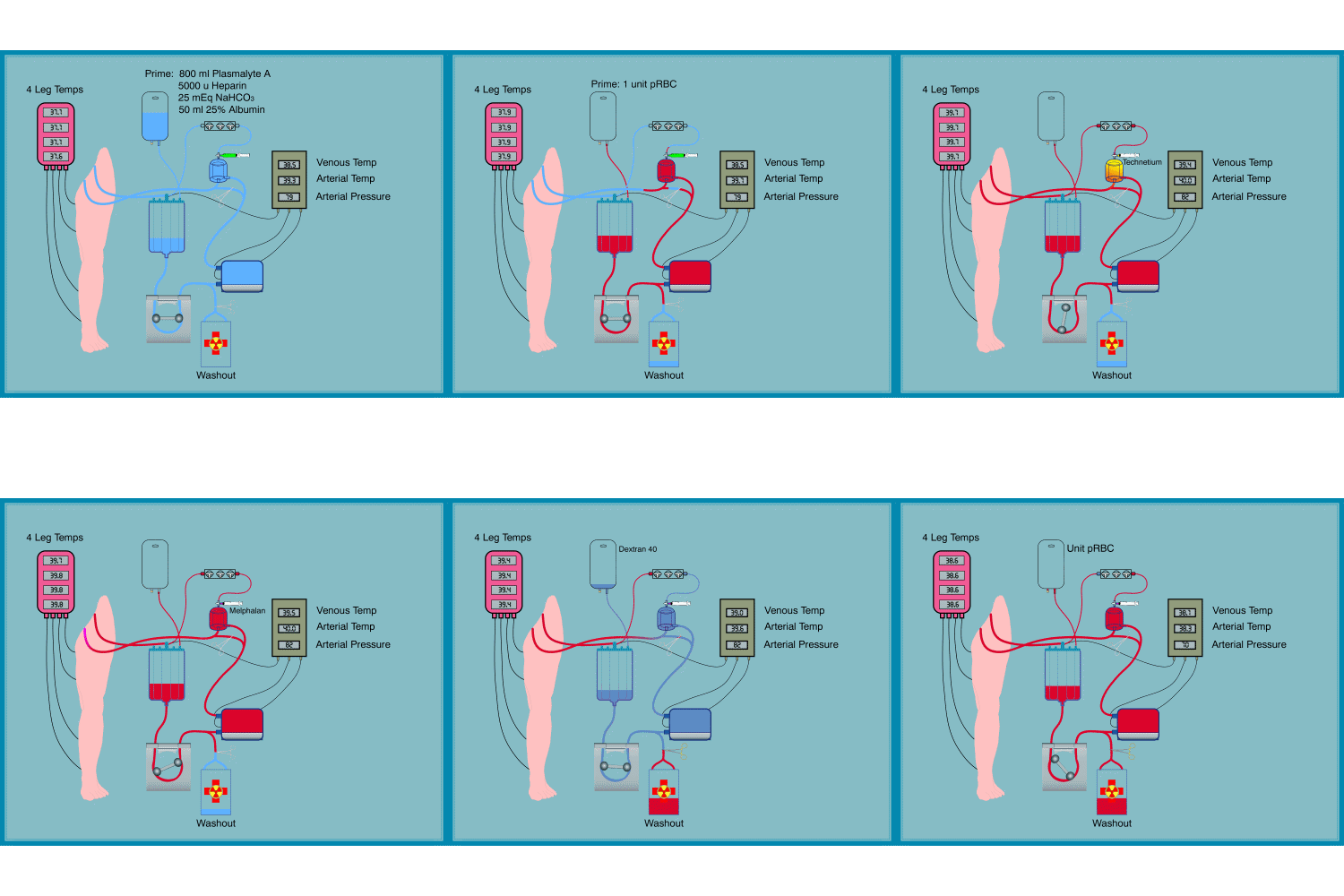
For in-transit metastases confined to a limb, some centres consider isolated perfusion or infusion and other local procedures. The aim is to concentrate treatment in one region, but this does not mean absolute absence of systemic exposure or risk. Pain, swelling and tissue injury can be important; these procedures require careful selection and specialist expertise.
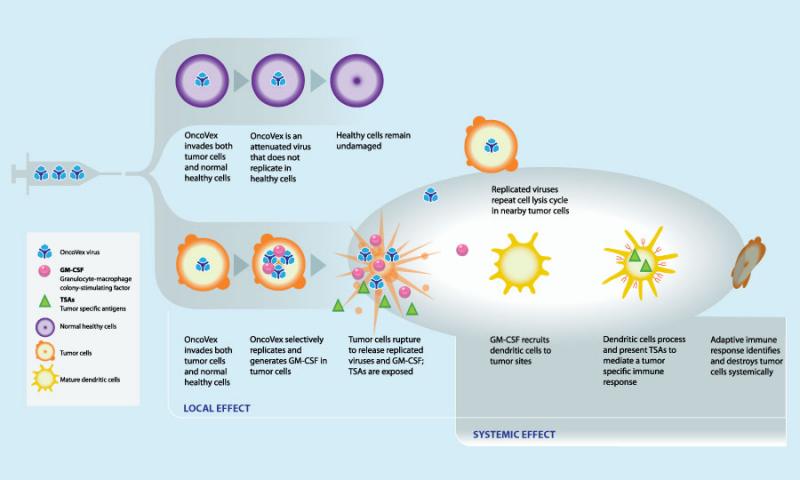
OncoVEX was the development name of the oncolytic virus talimogene laherparepvec, now known as T-VEC/Imlygic. It should no longer be described solely as a new phase III trial. Its European indication covers specific unresectable disease with skin, subcutaneous or nodal spread and no bone, brain, lung or other visceral disease.
As a modified virus injected into lesions, it requires specific precautions and is not a preventive vaccine. Local effects do not guarantee control of all metastases; availability and suitability must be checked with the centre.
In isolated perfusion at an experienced centre, the limb circulation is temporarily separated from the general circulation and connected to an extracorporeal circuit; warming and medicines may be used according to the protocol. The procedure involves anaesthesia and monitoring for systemic leakage. Isolated infusion is a different technique: the terminology and risks should be explained before consent.
Sources for this section: NICE NG14 — Melanoma: assessment and management; EMA — Imlygic (talimogene laherparepvec); National Cancer Institute — Melanoma Treatment, patient version.
Radiotherapy, brain metastases and symptom control
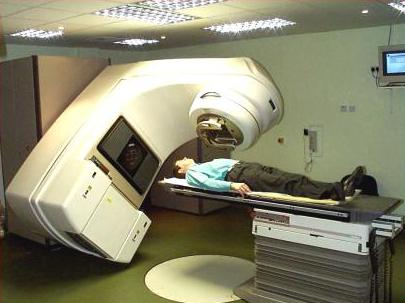
Radiotherapy is a local treatment rather than a medicine, but it may be integrated with systemic care. It has roles in controlling selected sites and relieving symptoms. Brain metastasis management may involve neurosurgery, stereotactic radiosurgery and systemic therapy according to lesion number, size, symptoms and the overall situation.
Gamma Knife and CyberKnife identify technologies: the machine’s name does not establish superiority or equivalence to another approach. Stereotactic radiosurgery should not simply be equated with whole-brain irradiation. Painful bone metastases or lesions at risk of fracture also require clinical and, where necessary, orthopaedic assessment.
Imiquimod may have specialist off-label use for selected in-situ lentigo maligna; it is not a standard systemic treatment for metastatic melanoma. The surgical treatment pathway explains this context.
Sources for this section: ESMO — Cutaneous melanoma: Clinical Practice Guideline (2024/2025); NICE NG14 — Melanoma: assessment and management.
Cellular therapies: distinguishing countries and indications
Adoptive cell transfer uses immune cells prepared for treatment. TIL products use lymphocytes obtained from the tumour, expanded and reinfused through a complex pathway that may include preparative chemotherapy and interleukin-2. This is not a simple transfusion and can require highly specialised care.
Lifileucel/Amtagvi received accelerated FDA approval in the United States in 2024 for a specific previously treated advanced-melanoma population. The European application was withdrawn in July 2025, as documented by EMA. It should therefore not be presented as routinely authorised in the European Union on the basis of the US decision.
Research on TILs, engineered cells and modified T-cell receptors continues. Tumour regressions in a small study do not establish a general success rate: protocol, selection, toxicity and duration of control are essential to interpretation.
Sources for this section: FDA — Amtagvi (lifileucel), accelerated approval; EMA — Amtagvi: withdrawal of marketing-authorisation application (2025); National Cancer Institute — Melanoma Treatment (PDQ), health professional version.
Experimental therapies: open questions, not promises
Research directions include personalised therapeutic vaccines, new immune-treatment combinations and approaches to overcome resistance. INTerpath-001 (NCT05933577) studies intismeran autogene/V940 with pembrolizumab after surgery for high-risk melanoma. This is treatment for people who have had cancer, not vaccination to prevent melanoma in the general population.
Morpheus-Melanoma explored new neoadjuvant combinations in phase Ib/II. Other programmes investigate targets such as CD137 or CD40: a target’s name does not mean an available standard already exists. Each combination must be assessed individually; an approved medicine can be experimental when used in a different regimen or setting.
A trial may provide research access but does not guarantee personal benefit. It requires a registered protocol, eligibility criteria, ethical review and informed consent. Check availability and alternatives with the oncologist without independently stopping or delaying treatment. “Active” in a registry does not necessarily mean recruitment is open at your centre.

Sources for this section: ClinicalTrials.gov — INTerpath-001, NCT05933577, phase 3; Morpheus-Melanoma — Randomized phase 1b/2 study (2025); National Cancer Institute — Participate in Cancer Treatment Trials; National Cancer Institute — Melanoma Treatment (PDQ), health professional version; Phase I/II melanoma vaccine with CD40 agonist — JITC (2026); LOAd703 — Engineered CD40L/4-1BBL approach in resistant melanoma (2026).
Preparing for consultation and interpreting sources
Bring reports, a complete medication list and written questions: what goal, expected benefit, alternatives, monitoring and contact arrangements apply? Also clarify the impact on work, fertility, pregnancy, travel and family support. Supportive care and pain control are part of the pathway, not a sign that anticancer care has been abandoned.
A median survival is not a personal deadline; a relative risk reduction is not the same percentage of cures. Reliable comparisons require defined populations and follow-up periods. Historical percentages are therefore dated and linked to their study, while indications refer to guidelines and regulatory documents.
EMA describes European authorisation; AIFA determines Italian access and reimbursement through applicable pathways. The centre always checks the actual situation. The editorial revision date records source checking and does not certify specialist clinical review.
Sources for this section: National Cancer Institute — Participate in Cancer Treatment Trials; AIFA — Reimbursement and pricing; National Cancer Institute — Melanoma Treatment (PDQ), health professional version.
Sources and update
- ESMO — Cutaneous melanoma: Clinical Practice Guideline (2024/2025)
- National Cancer Institute — Melanoma Treatment (PDQ), health professional version
- EMA — Opdivo: indications and product information
- EMA — Keytruda: indications and product information
- EMA — Yervoy: indications, product information and leaflet
- EMA — Opdualag: indications and product information
- Wolchok et al. — CheckMate 067, final 10-year outcomes (2024/2025)
- EMA — Tafinlar: indications, product information and leaflet
- EMA — Cotellic: indications, product information and leaflet
- EMA — Braftovi (encorafenib)
- DREAMseq — Randomized treatment-sequence trial (2022/2023)
- Blank et al. — NADINA, phase 3, NEJM (2024)
- AIFA — Nivolumab + ipilimumab, neoadjuvant treatment, Law 648/1996 (17 November 2025)
- NICE NG14 — Melanoma: assessment and management
- National Cancer Institute — Melanoma Treatment, patient version
- EMA — Imlygic (talimogene laherparepvec)
- FDA — Amtagvi (lifileucel), accelerated approval
- EMA — Amtagvi: withdrawal of marketing-authorisation application (2025)
- ClinicalTrials.gov — INTerpath-001, NCT05933577, phase 3
- Morpheus-Melanoma — Randomized phase 1b/2 study (2025)
- National Cancer Institute — Participate in Cancer Treatment Trials
- Phase I/II melanoma vaccine with CD40 agonist — JITC (2026)
- LOAd703 — Engineered CD40L/4-1BBL approach in resistant melanoma (2026)
- AIFA — Reimbursement and pricing
Editorial revision and source consultation: 17 October 2026. Study dates distinguish current evidence from historical documents. This date does not certify specialist clinical review.