The BRAF target and molecular selection
Vemurafenib, also known by the brand Zelboraf and development codes PLX4032/RG7204, inhibits mutated BRAF protein. It interferes with growth signalling through the MAPK pathway. It is not indicated indiscriminately for every melanoma: a BRAF V600 mutation must be documented with a validated test.
BRAF V600E was central to early development, but the European indication should not be reduced to the name of one commercial assay. The report must specify the variant and a specialist assesses its meaning. A molecular result does not replace histological diagnosis, staging or assessment of alternatives.
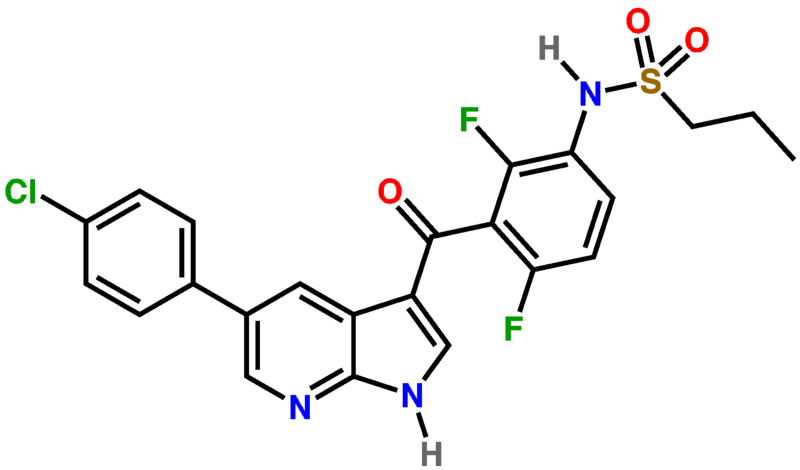
Sources for this section: EMA — Zelboraf: indications, product information and leaflet; NCBI ClinVar — BRAF c.1799T>A, p.Val600Glu.
BRIM-3 and the move to dual inhibition
BRIM-3, published in 2011, compared vemurafenib with dacarbazine in previously untreated BRAF V600E metastatic melanoma. The observed benefit helped establish targeted treatment. These results belong to a specific period and comparison: they do not automatically describe benefit against immunotherapies available today.
The subsequent coBRIM trial assessed adding cobimetinib, a MEK inhibitor, and showed better progression control than vemurafenib alone. BRAF/MEK combinations have taken a central role when targeted treatment is selected. Any monotherapy use requires clinical context and should not be inferred from older webpages or the medicine’s availability alone.
Sources for this section: Chapman et al. — BRIM-3, randomized phase 3 (2011); Larkin et al. — coBRIM, randomized phase 3 (2014); ESMO — Cutaneous melanoma: Clinical Practice Guideline (2024/2025).
Skin checks and general safety
Vemurafenib can cause photosensitivity, rashes, joint pain and other effects. Sun protection and dermatological checks are important, including for detecting new lesions, skin carcinomas or keratoacanthomas. A new lesion should be assessed rather than self-diagnosed.
Monitoring also addresses liver and cardiac issues and interactions with other medicines according to the centre’s plan and product information. QT-interval prolongation is one risk to consider. Report all medicines, herbal products and supplements. Dose, timing and management of a missed dose must follow the prescription and current leaflet, not a schedule reconstructed from an educational webpage.
Sources for this section: EMA — Zelboraf: indications, product information and leaflet; EMA — Cotellic: indications, product information and leaflet.
Resistance, sequencing and experimental combinations
A tumour can develop resistance even after an initial response. Progression does not mean every option is exhausted: disease sites, symptoms, previous treatments and subsequent options need reassessment. Sequencing trials inform discussion without justifying self-directed treatment changes.
Concurrent combination with ipilimumab is not a routine proposal: an early trial reported liver toxicity. Not every biologically plausible combination is safe. New uses or combinations outside established regimens must be assessed within their research or specific-access setting, distinguished from the vemurafenib–cobimetinib pair authorised for advanced disease.
Sources for this section: Ribas et al. — Hepatotoxicity with vemurafenib + ipilimumab (2013); DREAMseq — Randomized treatment-sequence trial (2022/2023); EMA — Cotellic: indications, product information and leaflet; National Cancer Institute — Participate in Cancer Treatment Trials.
Sources and update
- EMA — Zelboraf: indications, product information and leaflet
- NCBI ClinVar — BRAF c.1799T>A, p.Val600Glu
- Chapman et al. — BRIM-3, randomized phase 3 (2011)
- Larkin et al. — coBRIM, randomized phase 3 (2014)
- ESMO — Cutaneous melanoma: Clinical Practice Guideline (2024/2025)
- EMA — Cotellic: indications, product information and leaflet
- Ribas et al. — Hepatotoxicity with vemurafenib + ipilimumab (2013)
- DREAMseq — Randomized treatment-sequence trial (2022/2023)
- National Cancer Institute — Participate in Cancer Treatment Trials
Editorial revision and source consultation: 17 October 2026. Study dates distinguish current evidence from historical documents. This date does not certify specialist clinical review.